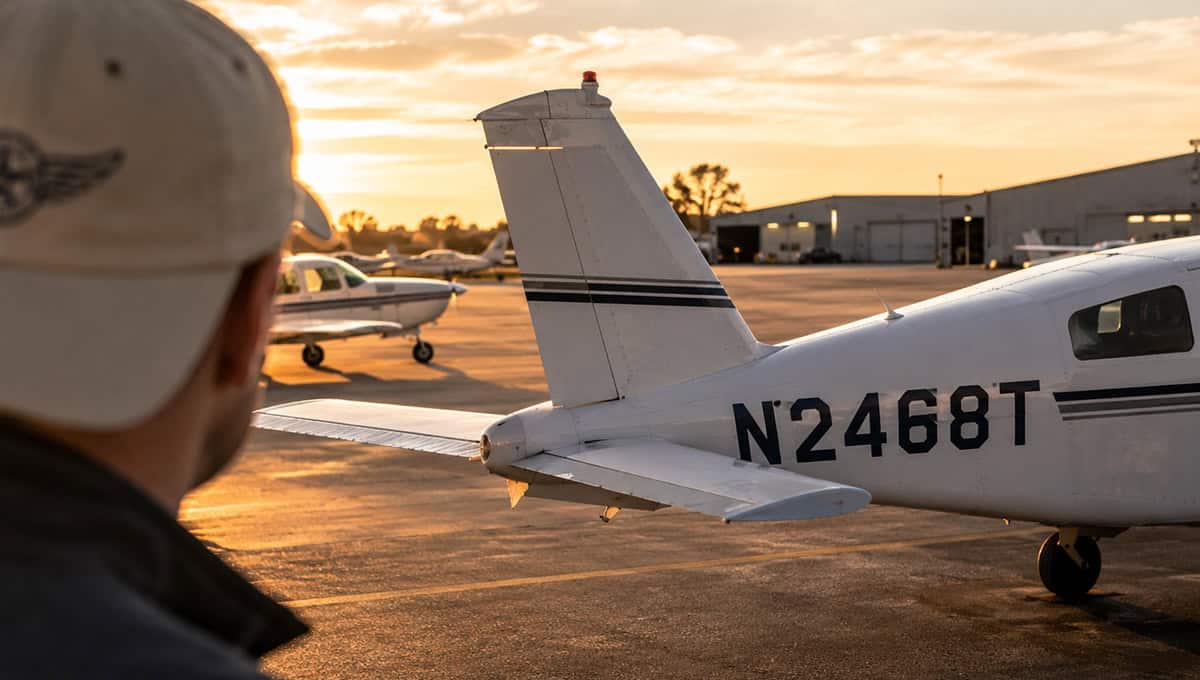
If you spend enough time around airports, you start to notice that pilots rarely think of an airplane as just a machine. It becomes their airplane. It has a personality, a story, and often a name.
For many pilots, that identity starts with one simple thing: the tail number.
You hear it in hangar conversations all the time.
“Is that your 172 out there?”
“No, mine’s N734JP.”
For non-pilots, a tail number might look like a random combination of letters and numbers painted on the side of an airplane. But for pilots, it often means much more than that. It is a registration, a call sign in everyday conversation, and in many cases, a personal connection to the aircraft they fly.
So what is a tail number exactly, and why do pilots care so much about it?
What Is a Tail Number?
A tail number is an aircraft’s registration number.
In the United States, it is commonly called an N-number because U.S.-registered aircraft use registration marks that begin with the letter N.
Think of it as the airplane’s official identity. Just like a car has a license plate, an airplane has a registration number that identifies it. That number is tied to the aircraft and appears in records, paperwork, flight planning, ownership information, and everyday pilot conversation.
Even though people call it a “tail number,” the marking may appear on different parts of the aircraft depending on the airplane’s design and registration requirements. The nickname simply stuck because many people associate the identifying marks with the tail section of an airplane.
Why Do U.S. Aircraft Start With the Letter N?
In the United States, aircraft registration numbers begin with N, which is why pilots often call them N-numbers.
According to the FAA history of N-numbers, the United States received the “N” nationality designator under the 1919 International Air Navigation Convention.
That single letter has become part of American aviation culture. It is instantly recognizable on the ramp, in logbooks, over the radio, and in pilot conversations.
When a pilot says, “I just bought N218TX,” other pilots immediately understand they are talking about one specific airplane, not just an aircraft model.
That matters because in aviation, details matter.
Two aircraft may both be Cessna 172s. They may even have the same paint scheme, similar avionics, and the same engine type. But their tail numbers make them distinct.
A Tail Number Is More Than a Registration
For many pilots, the tail number is where the airplane becomes personal.
A pilot might log hundreds of hours in the same aircraft. First solo. First cross-country. First family flight. First trip to Oshkosh. First hard-earned smooth landing in gusty winds. First time taking a friend up and watching them fall in love with aviation from the right seat.
All of those memories can become attached to one registration.
Over time, the tail number stops feeling like a code and starts feeling like part of the airplane’s story.
That is why pilots remember them so easily.
They may forget a receipt from last week. They may forget where they left the fuel tester. But they usually do not forget the tail number of the airplane they trained in, owned, or flew during an important chapter of life.
Why Pilots Talk About Airplanes by Tail Number
In the pilot world, tail numbers are practical.
If you are talking to a mechanic, looking through logbooks, checking ownership information, scheduling an aircraft, or discussing a specific airplane with another pilot, the tail number matters. It removes confusion. It identifies the exact aircraft, not just the type.
But there is also a cultural reason.
Pilots often use tail numbers the way car enthusiasts talk about a favorite build or boat owners talk about a vessel by name. It becomes shorthand for the airplane’s identity.
That is why you will hear pilots say things like:
- “I flew N5418R for years.”
- “My old Cherokee was N8262P.”
- “I still miss N118XX.”
- “That was the airplane I did my first solo in.”
It sounds small, but it says a lot.
The tail number is often the fastest way to name the airplane that mattered.
What a Tail Number Can Tell You
A tail number does not tell you everything about an aircraft at a glance, but it often tells you enough to start the conversation.
For pilots and aviation enthusiasts, it can point toward:
- the country of registration,
- the specific aircraft being referenced,
- registration records,
- ownership history,
- aircraft type information,
- and sometimes even a little personality.
Some pilots love short, memorable N-numbers. Others become attached to a number simply because it was their airplane. In some cases, a tail number even becomes part of an aircraft owner’s identity at the airport.
If you have ever watched a pilot glance across the ramp and instantly spot their airplane from a distance, you already understand the emotional side of it.
It is not just “a plane.”
It is that plane.
Tail Number vs. Flight Number: What’s the Difference?
This is where non-pilots sometimes get confused.
A tail number identifies the aircraft itself.
A flight number identifies a specific airline flight or route.
For example, an airline may operate a flight under one flight number today and another flight number tomorrow. But the aircraft itself has its own registration number.
In general aviation, the tail number is often much more central to how pilots identify an airplane because they are usually talking about the aircraft itself, not a commercial route.
Private pilots, aircraft owners, flight schools, mechanics, and aviation enthusiasts all use tail numbers because they are talking about a specific airplane.
Why Aircraft Owners Care So Much About Tail Numbers
For aircraft owners, the tail number becomes part of everyday aviation life.
It shows up in:
- hangar talk,
- maintenance records,
- logbooks,
- flight planning,
- aviation photos,
- online pilot communities,
- and personal gear.
That last part matters more than people might think.
Pilots are proud of the airplanes they fly. They take care of them, invest in them, clean them, upgrade them, troubleshoot them, and build memories around them.
For many owners, the tail number becomes part of that pride.
Wearing a custom hat, polo, jacket, or shirt with that aircraft silhouette and tail number is a way to carry that identity beyond the ramp. It is subtle, personal, and instantly meaningful to the right people.
That is why custom tail number apparel resonates with pilots. It is not generic aviation merch. It is your airplane, your story, and your flying life.
Why Tail Number Gear Connects With Pilots
The reason personalized aviation gear works so well is simple: pilots do not just love flying in general. They connect with the specific aircraft they fly.
A high-wing pilot may love the view, the utility, and the classic feel of a Cessna-style profile. That is why high-wing aircraft gear feels natural for pilots who fly aircraft with that familiar overhead-wing silhouette.
A low-wing pilot may connect with the sleek look, speed, and cross-country personality of aircraft like Piper, Cirrus, or Mooney-inspired silhouettes. For those pilots, low-wing aircraft gear matches the aircraft profile they identify with most.
A glider pilot has a completely different flying identity again.
Once you add the tail number, the gear becomes even more personal.
That is what makes it feel special.
It is one thing to wear a generic aviation shirt.
It is another to wear a hat that reflects the airplane you actually fly.
For some pilots, that means a clean embroidered cap from the custom pilot hats collection. For others, it means a minimalist piece that features just the N-number and nothing else. And for others, it means choosing everyday aviation gear that feels just as comfortable away from the airport as it does on the ramp.
The Tail Number Becomes Part of the Story
One of the best things about aviation is how quickly machines become memories.
A tail number can represent:
- the airplane a pilot learned in,
- the aircraft they saved for years to buy,
- the plane they flew with their kids,
- the airplane that carried them to their first fly-in,
- the aircraft they took on their first real cross-country,
- or the airplane they still look back on with a smile.
That is why tail numbers stay with people.
Long after logbook pages fill up and airplanes change hands, many pilots still remember those numbers. They remember how the airplane looked in early morning light. They remember how it felt in the flare. They remember the route home after a perfect summer flight.
And often, they remember the tail number just as clearly.
Final Thoughts
So, what is a tail number?
Technically, it is the aircraft’s registration number.
But to pilots, it is usually more than that.
It is identity.
It is memory.
It is pride.
It is the fastest way to point to one airplane and say, “That one is mine.”
If you are the kind of pilot who feels connected to a specific aircraft, it makes perfect sense to carry that identity off the ramp too.
Because in aviation, the story is never just about flying.
It is also about the airplane that made the journey yours.
Frequently Asked Questions
What is a tail number on an airplane?
A tail number is an aircraft’s registration number. In the United States, it is commonly called an N-number because U.S.-registered aircraft begin with the letter N.
Is a tail number the same as an N-number?
In the United States, yes. Pilots often use the terms interchangeably. “Tail number” is the common term, while “N-number” refers specifically to U.S. aircraft registrations.
Is a tail number the same as a flight number?
No. A tail number identifies the aircraft itself. A flight number identifies a specific airline flight or route.
Why do pilots care about tail numbers?
Pilots care about tail numbers because they often become tied to personal flying memories, aircraft ownership, training, and the identity of a specific airplane.
Can pilots put their tail number on apparel?
Yes. Many pilots like wearing custom tail number hats, polos, jackets, and shirts because it lets them represent the aircraft they fly in a personal and meaningful way.